The LVDT Calibration and Testing with N4L PSM1700
Last updated: 2 Apr 2026
582 Views
#Succesed
Defining the Go/No-Go Metrics: Ratio and Impedance
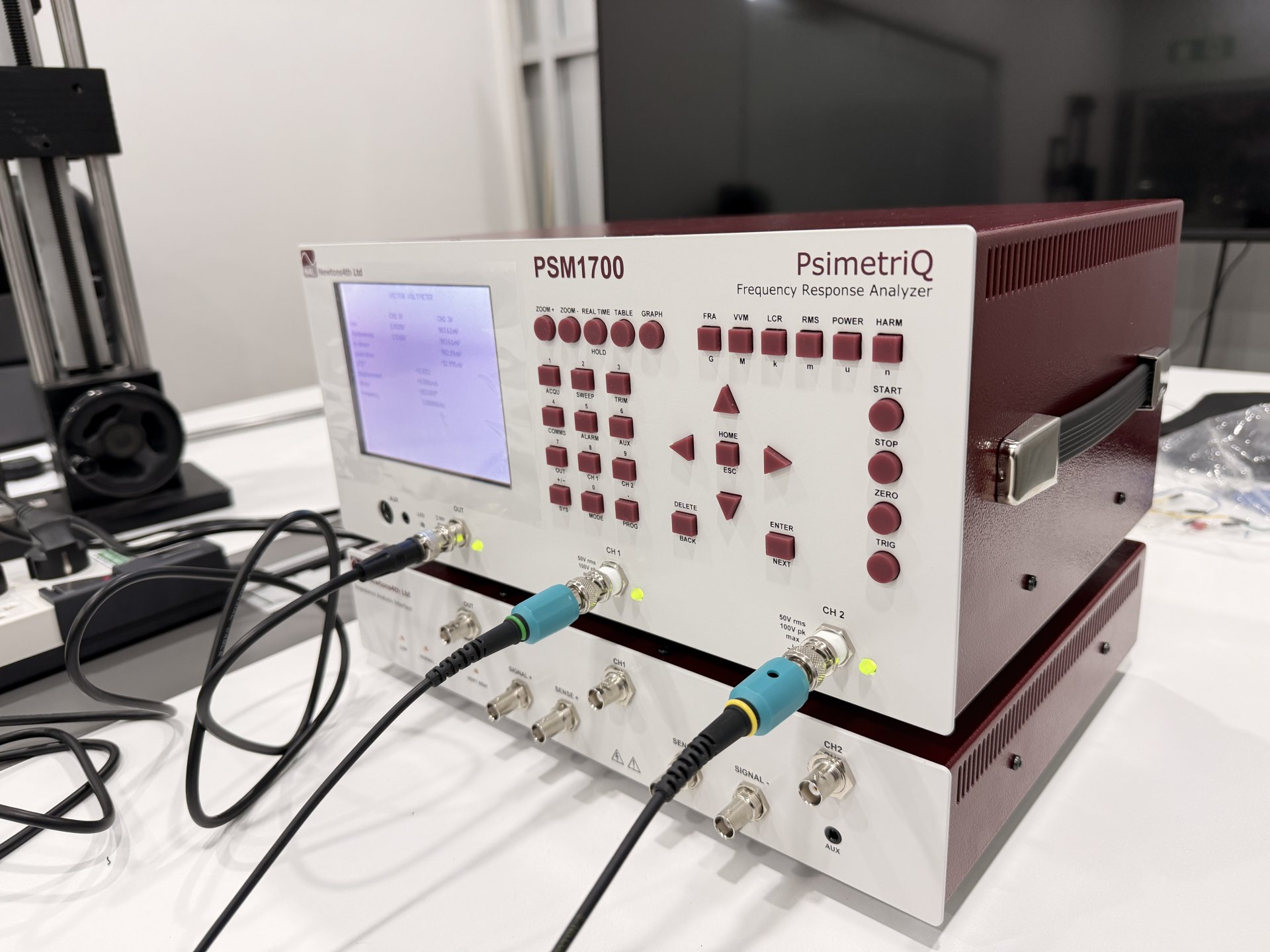
For the customer's quality assurance team, generating data wasn't enough; the automated system needed to make definitive, real-time "Pass or Fail" decisions based on strict engineering tolerances. To achieve this, the software was programmed to evaluate two critical parameters measured directly by the PSM1700:
1. The LVDT Ratio (Sensitivity and Linearity Check) The fundamental indicator of an LVDT's accuracy is its transformation ratio—the relationship between the secondary differential output voltage and the primary excitation voltage (expressed as V_out / V_in or mV/V).
Because the PSM1700 measures Channel 1 (excitation) and Channel 2 (output) simultaneously, it natively calculates this ratio with high precision. As the micrometer moved the LVDT core to predefined calibration points, the software evaluated the ratio against strict upper and lower limit bands.
Pass Condition: The ratio increases linearly exactly as specified by the sensor's datasheet, confirming the magnetic coupling is flawless.
Fail Condition: Any deviation outside the tolerance band immediately flags a linearity failure, preventing an inaccurate sensor from reaching the field.
2. Impedance Testing (Coil Health and Integrity Check) While the ratio confirms the sensor functions dynamically, the customer also required verification of the physical integrity of the copper windings. Using the PSM1700's precise voltage and current measurement capabilities, the system accurately calculated the AC impedance (Z) of both the primary and secondary coils.
This served as a crucial diagnostic test before the stroke calibration even began:
Pass Condition: The measured impedance falls within the specified Ohmic limits, confirming the coil windings are perfectly intact.
Fail Condition: A lower-than-expected impedance instantly indicates a "shorted turn" within the coil, while a higher impedance suggests wire fatigue, poor termination, or a broken winding.
The Automated Verdict
By combining these two distinct measurements, the test bench became foolproof. The PSM1700 acts as the high-precision judge, feeding exact Ratio and Impedance numbers to the software. If a unit passes the impedance check (verifying its physical health) and stays within the LVDT ratio limits throughout its stroke (verifying its dynamic accuracy), the screen flashes green: PASS. The system then automatically prints a traceable calibration certificate, ensuring the customer ships only flawless products.
Defining the Go/No-Go Metrics: Ratio and Impedance
For the customer's quality assurance team, generating data wasn't enough; the automated system needed to make definitive, real-time "Pass or Fail" decisions based on strict engineering tolerances. To achieve this, the software was programmed to evaluate two critical parameters measured directly by the PSM1700:
1. The LVDT Ratio (Sensitivity and Linearity Check) The fundamental indicator of an LVDT's accuracy is its transformation ratio—the relationship between the secondary differential output voltage and the primary excitation voltage (expressed as V_out / V_in or mV/V).
Because the PSM1700 measures Channel 1 (excitation) and Channel 2 (output) simultaneously, it natively calculates this ratio with high precision. As the micrometer moved the LVDT core to predefined calibration points, the software evaluated the ratio against strict upper and lower limit bands.
Pass Condition: The ratio increases linearly exactly as specified by the sensor's datasheet, confirming the magnetic coupling is flawless.
Fail Condition: Any deviation outside the tolerance band immediately flags a linearity failure, preventing an inaccurate sensor from reaching the field.
2. Impedance Testing (Coil Health and Integrity Check) While the ratio confirms the sensor functions dynamically, the customer also required verification of the physical integrity of the copper windings. Using the PSM1700's precise voltage and current measurement capabilities, the system accurately calculated the AC impedance (Z) of both the primary and secondary coils.
This served as a crucial diagnostic test before the stroke calibration even began:
Pass Condition: The measured impedance falls within the specified Ohmic limits, confirming the coil windings are perfectly intact.
Fail Condition: A lower-than-expected impedance instantly indicates a "shorted turn" within the coil, while a higher impedance suggests wire fatigue, poor termination, or a broken winding.
The Automated Verdict
By combining these two distinct measurements, the test bench became foolproof. The PSM1700 acts as the high-precision judge, feeding exact Ratio and Impedance numbers to the software. If a unit passes the impedance check (verifying its physical health) and stays within the LVDT ratio limits throughout its stroke (verifying its dynamic accuracy), the screen flashes green: PASS. The system then automatically prints a traceable calibration certificate, ensuring the customer ships only flawless products.


Related Content

Santratek Solution provide deliveried of DC Power Supply to Power Electronic laboratory to university of engineering, teching of student, and improve their product such as motor design and testing

We have successfully delivered ETS-Lindgren RF absorbers to the National Astronomical Research Institute of Thailand (Public Organization) – RF Team, supporting their advanced RF research and testing activities.